
autocatalytic stable state
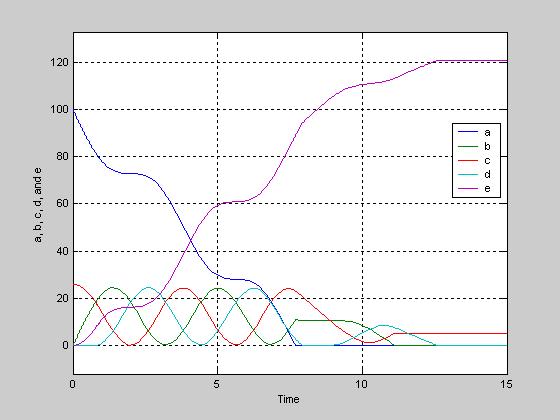
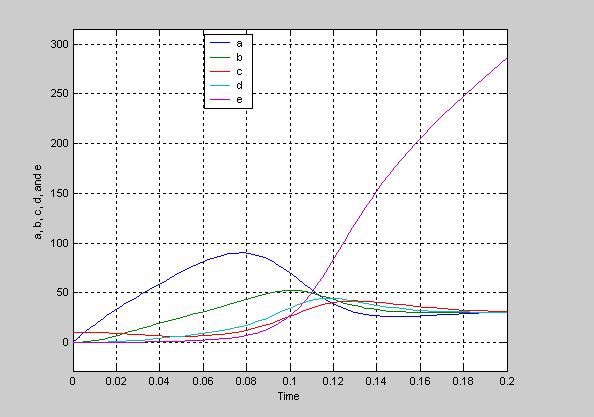
Song currently found enjoyable: "Sitting, Waiting, Wishing," Jack Johnson I wasn't too fond of this guy on first listening, but 103.9's been playing this song quite often, and it's quite grown on me. Granted, it's ickily soft, and the underlying sentiment's a bit silly, but I quite like the contrast between the impish wit in "Maybe you've been through this before/But it's my first time so please ignore/These next few lines because they're directed at you" and the soulful melody. Great to sing along to. Oh, speaking of which, Grant and I discovered a fantastic MIDI page during our sing-along Tuesday night. (My first sociology paper was due the next day, so we had to kill time until I started it around five in the morning.) A few faves: "Bare Necessities," "Do You Hear the People Sing," "I Just Can't Wait to be King," "Phanton of the Opera Theme." (Sorry if it's ugly extending the links through punctuation, but I realized that the other way is a use-mention fallacy, and semantics beats aesthetics any day.) So yeah. Been a week. Sorry. I've been trying to start it, but Perceiving always wins when I try to put thoughts down in writing, and I've been uncommonly pensive of late. Thanks for the reminder, Confessor. Let's see. Oh, first, my awesome chemistry thought experiment. I was wondering the other day whether order can be efficiently transmitted within a system (specifically, whether my Dr Pepper would continue its vortex were I to drain the bottle while continually pouring in additional liquid), and I decided to simulate it with an autocatalyzing chemical reaction. Don't ask; it was a blindingly yellow train of thought. Anyway, imaginary chemical has five states, A-E. C catalyzes A->B, B catalyzes C->D, D catalyzes B->C, and C catalyzes D->E. All reactions occur at the same rate. With much trial and error, I got them plugged into Matlab using ODESolve. I first stupidly assumed that the rate would be proportional to the concentration of catalyst. It made pretty graphs, though. After I corrected it to reflect the collision rate of catalyst and reagent, it got much messier. I'm considering using it for my differential equations research project. It would probably need to be fleshed out (probably, say, by using differing reaction rates), but eh, it'll be fun. It's an interesting phenomenon; for example, the stable state in the corrected version is dependent only on the rate of introduction of reagent, not the initial concentration of catalyst. Went to Buca Di Beppo last Saturday. Great place. Sat at the kitchen table. Krystal didn't have any calimari, which was a shame. I mean, I hate seafood, and I'm quasi-vegetarian, but come on, it's calimari. Who can turn down food with tentacles? We tried to catch Hitch afterward, but it was closed, so we rented The Village instead. I thought it an enjoyable piece, and was even surprised by most of the plot twists. Eric D. Snider's criticisms thereof were valid, but I enjoy the acting and atmosphere even in the absence of a compelling plot. Of course, I ached a little at Ivy's "I do long to do boy things." I quite liked that scene in general, but it was tarnished by the reminder that every modern story needs a girl with Big Dreams held back by Patriarchal Society. As usual, it got me thinking about gender, society, and the Gospel, but I tried to forestall indignation, and I'm rather pleased with the results. Basically, it was a matter of accepting that such a longing is entirely understandable, even justified. Frankly, I'm disappointed in myself for not seeing it sooner; the imbalance could hardly be stated more starkly than my "no woman can find fulfillment in pure dependence, and no man can find peace in pure stoicism." When put in those terms, it's fairly obvious which is more appealing. Likewise, even in Paul's pleasant analogy on the matter, one must wonder, "Who would rather be debtor than Savior?" Even my last sociology paper pointed out the apparent denigration in a role setting an example for the infantile. As I pondered it that night in scripture study, I repeatedly demanded of myself, "But who gets the glory?" It kept hammering away, and I thought it was convincing me of the wrongness in overapplying Paul's model, forcing me to admit injustice. After a few minutes of it, though, I finally realized what I was supposed to learn: Christ was chosen specifically because He didn't claim the glory of His actions. Because even in His role as leader, demonstrating such essence of parenthood that we can call Brother Father, He gave all praise to God, acting purely out of love for us. It's a sobering thought, the realization that such is men's duty to their families. However, I'm not going to pretend that we can say, "Yes, but men are supposed to credit God for their leadership," and all gender strain vanishes. There's still great conflict between the Pauline model of marriage (Christ and the Church), the romantic half-a-person-without-you dependent model (say, a ying-yang, or double helix), and the modern independent model (two posts standing firm under a lintel). It seems all of them are doctrinally precedented to some extent or another, too. A 1993 Relief Society Meeting message from Elder Packer sheds some light on the matter. As I ponder the topic (this entry is taking hours and hours), I come to value even more eleka's thoughts on the topic: "My bit on the parent-spouse idea.. I think that it would be incredibly unhealthy and damaging to go into a marriage being dependent on one's spouse. I don't want to marry anyone until I feel completely psychologically independent and complete. However, perhaps once one IS married, the two independent beings begin to symbiote.. and become dependent upon one another. Dependency coming from independency. I expect that this is how it will happen for me. I have the tendency to be at the same time independent from those I'm in a relationship with, and incredibly emotionally attached to those of the most import." Elder Packer's words seem to support the post-and-lintel model; he speaks of our complementary capacities, and while the Church would clearly fail were it not for either motherhood or priesthood, he makes it fairly evident that each body completes a work valuable unto itself. And yet President Hinckley's touching words, "It cannot be very long before one of us will step through the veil. I hope the other will follow soon. I just would not know how to get along without her, even on the other side, and I would hope that she would not know how to get along without me (2003)," suggest to me that eleka is bang-on about acclimatory communalism. Call me Pangloss, but I endlessly wonder why a dual order has been established, why gender is necessary, why Deity is not atomic. Heh, "tomic," I suppose. I mean, it certainly makes sense in this frail existence, acknowledging that, just as we send missionaries out two by two to cry repentance, surely it would be foolhardy to entrust the edification of our littlest ones to individuals acting singly. (Needful exceptions, of course, acknowledged and admired.) It's a simple reflection of our inability to be purely parents; we all still need to be nurtured sometimes. It seems suspect, however, if not outright blasphemous, to assume an exalted being still needs such support. My first suspicion is that, terrestrial procreation being the modus operandi for populating this world, parenthood is forced upon the imperfect, necessitating duality as a stabilizing force. It's decent reasoning, particularly because I'd contend that parenthood is the only way out of imperfection, but I'm loathe to declare that marriage is eternal out of habit, eventually becoming vestigial. Another option rejects eventual autonomy: perhaps we never become individually omnipotent, only dually. It's an interesting concept. We seem quick to describe the strengths of each gender, but hesitant to assign intrinsic weaknesses; will there be characteristics in which exalted women are still superior to exalted men and vice versa? I recognize that the priesthood/motherhood arrangement establishes a de facto dependence, but I'd prefer a deeper reason that we originally find ourselves in such a circumstance. A third possibility has occured to me in reflecting upon my last entry's rant about love as stemming from understanding. I've thought in the past that it must be frustrating for God to need to speak in terms best suited for us, flattening omniscience into bite-sized, straightforward declarations (I, for one, cannot communicate without asides). As I sat in dawn's glow that morning, though, I saw for the first time the beauty in such a thing, in knowing someone so well you can say exactly what they need most. However, even the mother most in-tune with her children, most happy to play peek-a-boo, finds relief in the return of her husband's company. Is our duality intended to provide release from that condescension, to allow the infinite communion of omniscience minds? All fascinate me, and I know there are more I haven't considered, so I'd greatly appreciate anyone's thoughts on the matter, particularly Brother Wright's, as I believe you to be my only commenting reader with practical experience in the matter. I expect I'll make this my first thread on blue-beta too. Hmmmmm, other stuff. We had a really cool letter from the First Presidency read in our Elder's Quorum last week. I mean, it wasn't a shift in policy--they just reaffirmed our stance against same-sex marriage and reminded us to be welcoming to those who consider themselves homosexuals but remain chaste--but I appreciated it despite our Elder's Quorum President's commentary focusing exclusively on the former. They even used the term "sexual orientation" in a respectful way, which was interestingly PC. The Church is so awesomely with it. I'm very impressed with the recent focus on single members. Oh, watched a grand BYUTV special on Hugh Nibley with Dad the other night. Dad's very taken with his teachings; he's largely given up hunting and even considered adopting a more agricultural lifestyle. I was most struck, though, by his assertion that our two unique, cherished abilities envied by the angels are repenting and forgiving. When "repenting" is understood properly as a constant pursual of perfection, it's significantly less simplistic, but I still like the perspective. I kind of wished we focused on forgiveness more, in truth. I mean, there are plenty of lessons on not going inactive because someone in the ward is mean to you or holding grudges, but I, for one, would benefit much more from reminders to work on microforgiveness, the psychological skill of remembering that other people are generally trying their best. Hmmmmm...that's about it. Life is fairly rocking. I've lost it a couple of times this week, but the moments of sublime peace, that metabliss when I rejoice in my own emotional stability, have been rather more numerous. Attended my Institute class twice, got to speak for my group about our analysis of D&C 92. I worked "socioemotional" into the analysis, and the teacher remarked twice on the brilliant job we did, which was fun, though I didn't take it too seriously, what with the anti-intellectual kick. Also hung out with the missionary committee guys for a little NFL Blitz action. Funny how every discussion eventually turns to the mission with them. Great guys. Had psychologist's and bishop's interviews, just reminding them how awesome I am. Went shopping with Geneva and her sister on Friday, procuring a splendid necktie. I seriously adore ties, just in case any of you ever want to buy me a present. Oh, and one of my classmates in modal logic called my unconventional proof elegant, which pleased me enormously, 'cause everyone in that class is a freaking genius. So yeah, am being a leader among peer groups and such. Fun times. Bye for now.

0 comments:
Post a Comment